
Checking Criminal History in Linn County
No single search contains every Linn County criminal record. Begin with the record’s purpose. Use Iowa Courts Online for public case entries filed in the Iowa District Court. Use the Linn County jail roster or the correctional center phone line for present custody. Ask the arresting police agency for its incident narrative. Choose the Iowa Division of Criminal Investigation when an official, statewide name-and-date-of-birth result is needed.
Names may appear with a middle initial, former surname, or spelling used at booking. Court searches can return several people with similar names, so compare the county, filing date, case type, and other public facts. A missing result is not proof that no record exists. The case may be outside Linn County, too new to appear, archived, confidential, or held only by another custodian.
- Search Iowa Courts Online by case number when one is known, or by name with Linn selected as the county.
- Check current custody through the Linn County roster and call 319-892-6300 when a live status needs confirmation.
- Identify the arresting agency before requesting an incident or arrest report.
- Read the court docket for the filed charge, disposition, sentence, and later case events.
- Order a DCI check for the statewide fingerprint-supported history that Iowa law permits DCI to release.
Linn County Records Cross Three Offices
Downtown Cedar Rapids places three key record holders close together, but they do different work. The Linn County Courthouse at 51 Third Avenue Bridge houses the Clerk of Court and adult criminal courtrooms. The Correctional Center at 53 Third Avenue Bridge creates booking and custody records. Sheriff headquarters at 310 Second Avenue SW handles sheriff-generated reports and local public-record requests. Asking the closest office is not enough; the record must belong to that office.
Linn County Clerk
51 Third Avenue Bridge
Cedar Rapids, IA 52401
319-398-3411
Criminal/Traffic ext. 1132 or 1162
Sheriff Criminal Division
310 Second Avenue SW
Cedar Rapids, IA 52404
319-892-6250
Weekdays, 8 a.m. to 4 p.m.
Correctional Center
53 Third Avenue Bridge
Cedar Rapids, IA 52401
319-892-6300
Current custody information
The county’s published jail-time scheduling page illustrates why status details require the right office. Its rules concern court-ordered surrender and jail intake, not proof of a past conviction. The official page shown below helps readers separate a jail deadline from a court docket event.
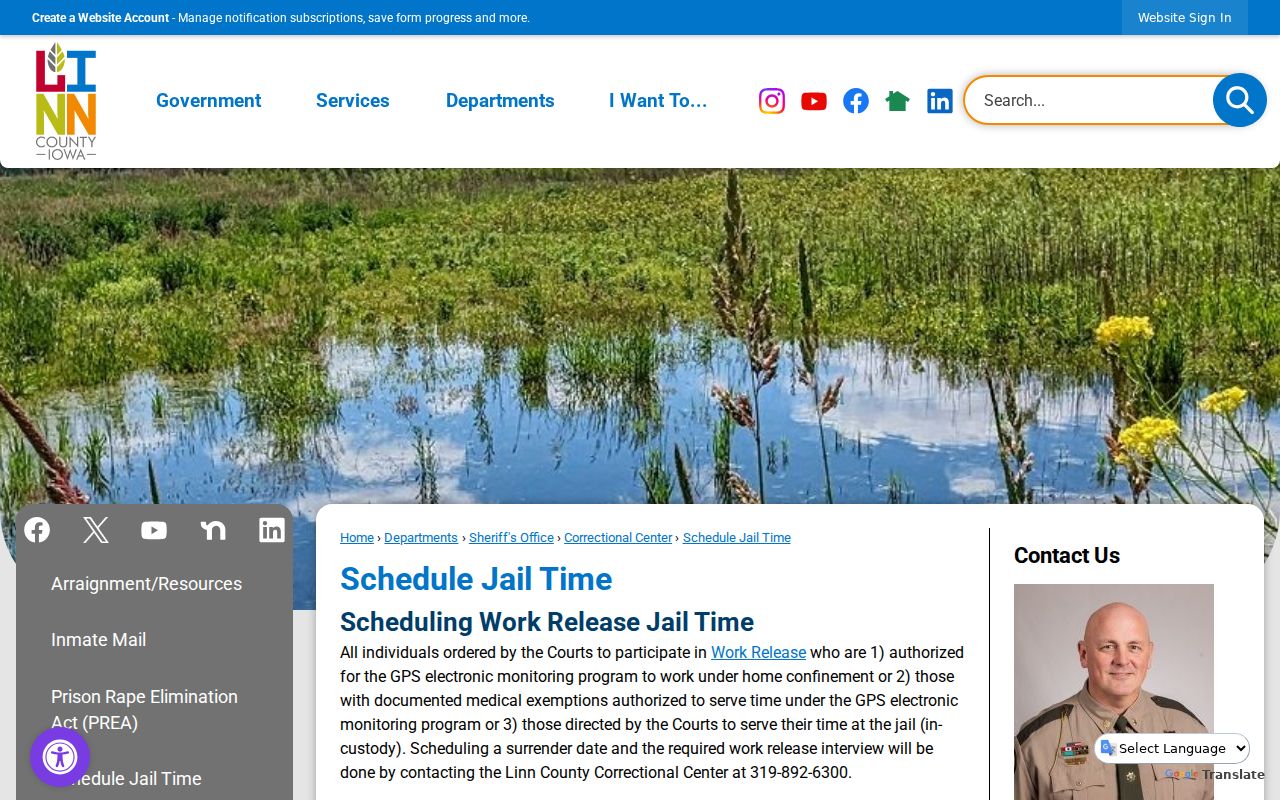
A court order starts that process, while jail staff schedule the confinement. Both records may be needed to understand what happened.
Iowa Official Background Checks
The Iowa Department of Public Safety, Division of Criminal Investigation, Records and Identification Unit keeps the central fingerprint-backed repository. Its Iowa Record Check Online instructions require a first name, last name, and exact date of birth. Each last name costs $15, so an alias or former surname needs its own paid form. Online, mail, fax, email, and in-person channels are available. Phone requests are not accepted.
Online submission uses both a request form and a billing form. A card or DCI account number is required, along with a return address and a workable email or fax route. Signed authorization changes what DCI may release. Without it, completed deferred judgments and arrests older than 18 months without a final disposition are withheld. Juvenile information remains generally confidential.
The official DCI instructions appear in the state criminal-history check source captured below.
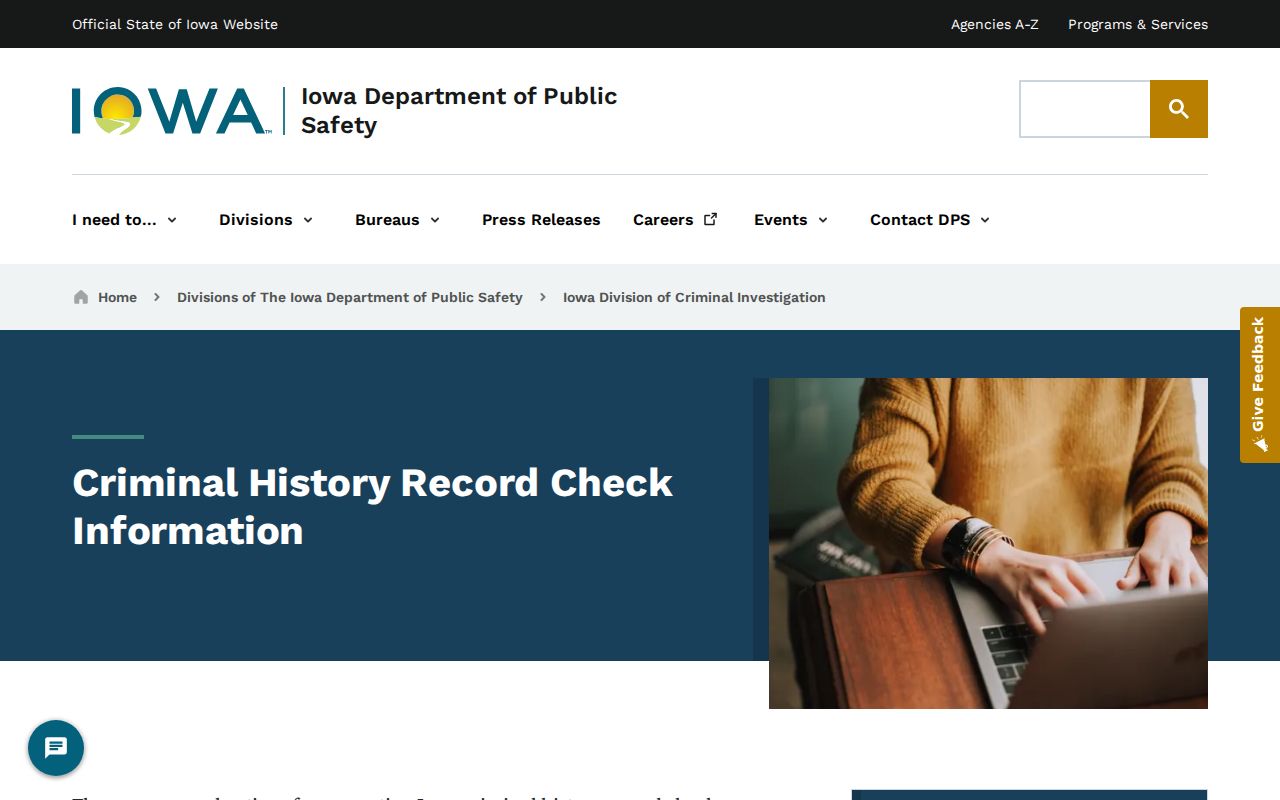
The screen confirms the state route and should be read with the limits on authorization, identity matching, and separate surname fees.
Linn County DCI Check Limits
A DCI result is not a copy of every Linn County file. It organizes fingerprint-supported Iowa arrest cycles and reported dispositions that may lawfully be released. The police narrative, jail intake sheet, and complete clerk file remain with their own custodians. A result that says no Iowa criminal history was found can mean no matching record, but it can also reflect nonreleasable information or confidential juvenile data.
| Channel | Best answer | Main limit |
|---|---|---|
| Iowa Courts Online | Filed case and docket | Not every document is free online |
| Linn jail roster | Current custody | Not a full arrest archive |
| Local police or sheriff | Agency report | Covers only that custodian |
| Iowa DCI | State repository result | Release rules can hide some data |
| Iowa Offender Search | State prison or supervision | Does not show county-jail custody |
For self-review, a person may visit DCI with government photo identification and seek an immediate result. A third-party request left at the counter follows normal processing. DCI may use comparison fingerprints when a person challenges an incorrect match.
Criminal Record Types
Each Linn County criminal record answers a narrow question. An incident report describes an officer’s response and alleged conduct. The jail’s booking file records intake. A court file shows what prosecutors filed and how the judge resolved it. DCI links fingerprint-supported arrest cycles to reported outcomes, while the Iowa Department of Corrections records state prison, probation, and parole status.
- Arrest report: request it from the law-enforcement agency whose officer created it.
- Booking record: use the Linn County Correctional Center for intake and present custody facts.
- Court case: search the Linn Clerk’s public docket through Iowa Courts Online.
- Warrant: confirm public case status with the Clerk or the responsible law-enforcement agency.
- Registry listing: use the DCI Iowa Sex Offender Registry for current statutory registration data.
A charge label can change between arrest, filing, and disposition. Treat each source as a snapshot from its own stage. The Linn County criminal court cases page focuses on the clerk file after charging.
Linn County Jail Records
The Sheriff-operated Linn County Correctional Center is the county’s only jail and has 401 beds. Its roster is built for present custody, not a complete history of everyone ever arrested. A person may be absent after release, transfer, a citation without booking, or movement to state prison. Call the jail information line before travel when custody status matters.
A public profile may show a name, booking identifier, booking time, arresting agency, intake charges, bond, and current status. Those entries do not decide guilt. Court filings can lag the booking and may use amended charges. Sensitive medical, mental-health, internal placement, victim, and full government-identifier data should not be expected in the public profile.
The county’s Correctional Center overview supplies the official facility role and capacity. That jail page provides the local custody route; Iowa Offender Search takes over after a state prison or supervision placement.
Inside a Linn County Criminal Record
Read any match in layers. Identity fields help separate people. The arrest cycle identifies the date and agency. Court fields show whether a charge was filed, changed, dismissed, deferred, or resolved by conviction. Sentence and supervision entries describe what followed. Protected identifiers are redacted from public copies, and some documents remain confidential even when a public docket line exists.
| Name and identifiers | Legal name, aliases, date of birth, physical descriptors, and a state identification number where releasable. |
|---|---|
| Arrest and booking | Arrest date, agency, intake time, booking number, initial charge, and bond. |
| Court case | Case number, filed charges, docket events, lawyers, hearing dates, and status. |
| Disposition | Dismissal, acquittal, deferred judgment, plea, verdict, or other final action. |
| Sentence | Confinement, fine, costs, restitution, probation, and related court orders. |
| Custody or supervision | County jail status or the public IDOC prison, probation, and parole subset. |
Note: A scheduled hearing is not a disposition, and an intake charge is not necessarily the offense that appears in a final judgment.
Linn County Supervision Records
Linn County lies in the Iowa Department of Corrections Sixth Judicial District. That district provides probation, parole, pretrial supervision, residential placement, electronic monitoring, drug treatment court, and other programs. The Iowa Board of Parole makes release decisions; district staff carry out field supervision. This state and district structure differs from a county-run probation department.
The Sixth Judicial District page supplies local program and facility context for the image below.
Public IDOC data can include name, age, sex, status, non-home location, supervision offense, county of commitment, and duration of supervision. Material outside the public list may require a release, subpoena, or court order.
The state’s IDOC open-records page explains those public fields and fee practices in the capture below.
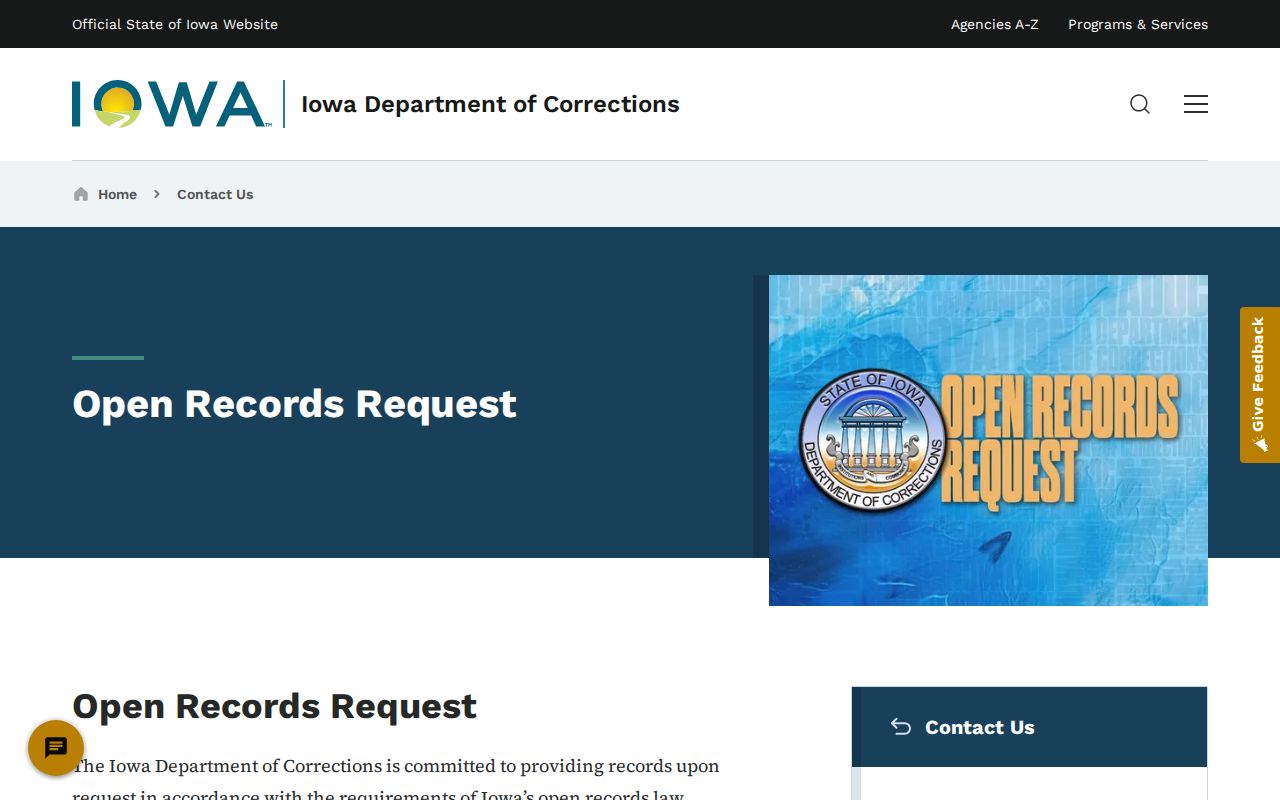
This channel belongs to state custody and supervision, not local police reports or a current county booking.
Public Access Laws in Iowa
The Iowa Open Records Law gives people a right to inspect and copy public records, subject to specific confidential categories. The practical rule is to request a record from its custodian. A focused request names the report type, date and place, agency, incident or case number if known, and desired file format. A custodian may redact protected information while releasing a separable public part.
Key Iowa laws:
Iowa Code chapter 22 governs access to public records and confidential exceptions.
Iowa Code chapter 692 controls DCI criminal-history access, dissemination, fees, and challenges.
Iowa Code chapter 901C sets the state’s defined expungement routes.
Iowa Code chapter 692A governs sex-offender registration and lawful public use.
Unexecuted warrants, juvenile matters, presentence reports, victim identifying details, medical information, and other protected material may be withheld. Public access never changes an allegation into proof of guilt.
Linn County Report Requests
The Sheriff’s Criminal Division processes requests for sheriff accident and criminal reports, local history checks, booking materials, and related records. Submit the online open-records form, call 319-892-6250, visit the office, or use mail or fax. Staff contact the requester before work when payment is required. The form asks for requester contact details, a preferred return method, and a clear description of the information sought.
Do not use the Sheriff form for a Cedar Rapids, Marion, or Hiawatha police narrative. Send that request to the city department that created it. Likewise, ask the Clerk for filed court documents and DCI for the statewide repository product. A narrow request saves search time and makes redaction review easier.
A useful request names the incident or arrest report, gives the date and approximate time, identifies the location and handling agency, and includes a report or booking number when known. Ask for an electronic, noncertified copy if that format will meet the need. When an entire file contains protected material, ask whether the public portion can be released after redaction. This approach gives staff a workable search range without seeking every record about a person across agencies.
For Hiawatha-specific context, the city government page captured below shows the municipal source tied to city-held records.

The city channel is distinct from the county sheriff even though a Hiawatha arrest may later reach the same Linn County jail and district court.
Sealed, Expunged, and Restricted Records
Iowa expungement is statute-specific. Chapter 901C can cover qualifying charges that ended in acquittal or dismissal and certain misdemeanor convictions after more than eight years, when all conditions are met. Pending charges, unpaid financial obligations, disqualifying history, and excluded offense categories can prevent relief. The misdemeanor remedy is generally once in a lifetime, though one application may include related misdemeanors from the same event.
File the current Application to Expunge Court Record in the Iowa District Court for Linn County through EDMS or the Clerk as allowed. Confirm any filing cost because the research did not locate a current official amount. If relief is granted, verify both Iowa Courts Online and the DCI record after processing. A completed deferred judgment has special treatment: it can be expunged at court level yet remain in DCI files as a discharged non-conviction released only with signed authorization.
- Expunged
- Made confidential or removed as the authorizing Iowa statute directs.
- Deferred judgment
- Judgment is withheld while conditions are completed; court and DCI effects differ.
- Sealed or confidential
- Unavailable to the general public but still reachable by authorized users or court order.
Linn County Warrant Searches
No verified public Linn County name-based active-warrant portal was found. Do not use the jail roster or a police call log as proof that no warrant exists. Search Iowa Courts Online for public docket activity, ask the Clerk about the case, or appear at a law-enforcement agency with photo identification. Marion Police expressly directs warrant inquiries to any law-enforcement agency in person with ID.
Unexecuted arrest and search warrants can be confidential. A Sheriff records request may help when public warrant information is sought, but staff must apply the access rules. One local deadline is especially important: failure to schedule court-ordered jail time within 15 calendar days can result in a warrant. Resolve a warrant question through official channels rather than relying on an absent web result.
Linn County Criminal Records by City
Cedar Rapids, Marion, and Hiawatha police create their own incident records. All three cities route state criminal cases into Iowa’s unified District Court rather than separate municipal criminal databases. City records therefore add the local report and call context, while Linn County supplies the jail and Clerk channels.
Cedar Rapids Criminal Records
Police Logs, CRPD report channels, and the path from a city event to county court.
Marion Criminal Records
A no-charge Marion-only record letter and detailed city copy-fee rules.
Hiawatha Criminal Records
City Hall police access, free inspection, copy pricing, and a published response schedule.
Linn County State Offender Records
Use Iowa Offender Search after a person enters state prison or when public probation or parole status is the question. It does not replace the Linn County jail roster. County custody may end through release or transfer, and the state locator then becomes the more useful channel. Federal custody requires the Federal Bureau of Prisons locator instead.
The IDOC inmate and family services page provides the official route to Find an Offender shown below.
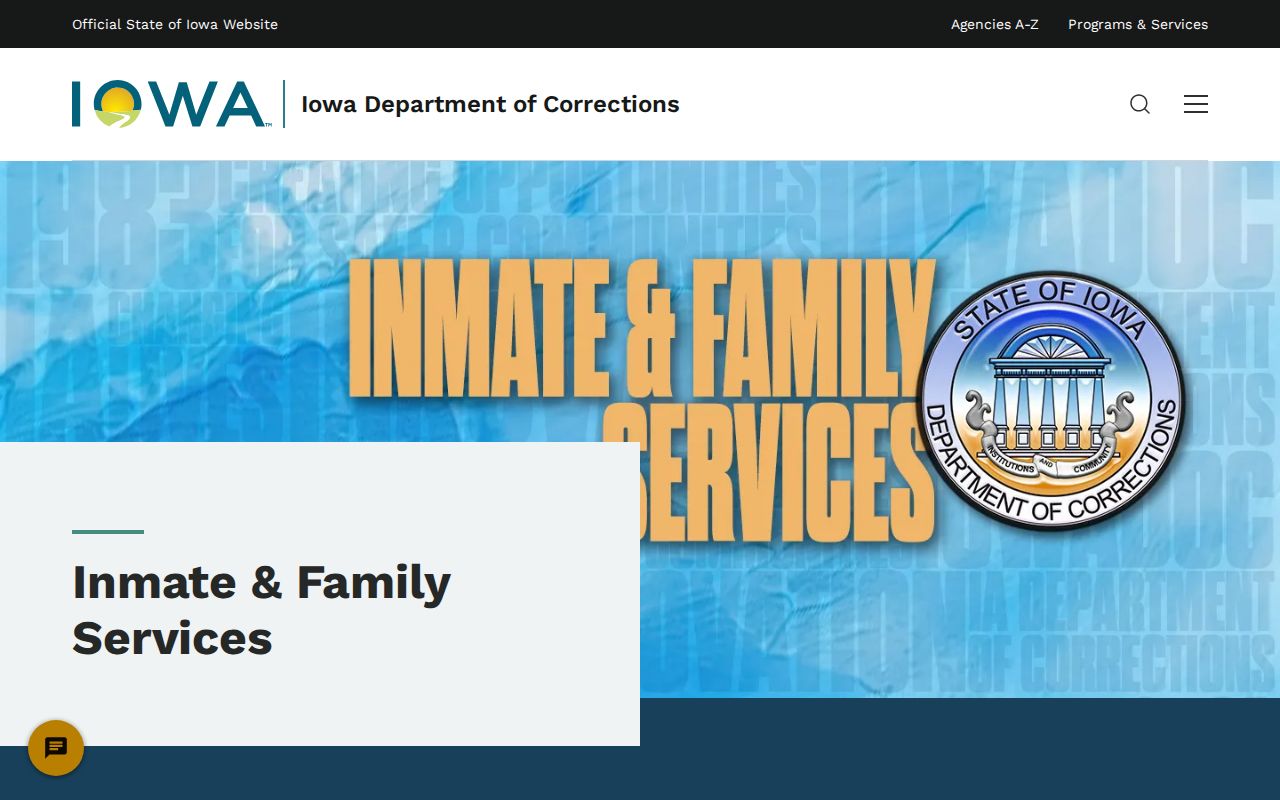
The custody source should match the institution: Linn County for the local jail, IDOC for state custody and supervision, and the federal locator for a federal sentence.
Federal criminal cases from Linn County use PACER and the Northern District of Iowa, not Iowa Courts Online. The Cedar Rapids federal courthouse is at 111 Seventh Avenue SE, and the Federal Bureau of Prisons locator covers federal custody. An FBI Identity History Summary is also separate. It is a subject-only fingerprint product ordered through the FBI’s EDO channel, not a public name search. These distinctions prevent an Iowa county query from being treated as a nationwide record check.