
Linn County Arrest History
Linn County arrest history is spread among several custodians. The Linn County Sheriff, Cedar Rapids Police, Marion Police, Hiawatha Police, Iowa State Patrol, and campus police may create the officer's arrest or incident report. When a person is taken to the county jail, the Linn County Correctional Center creates a separate booking record. The Iowa District Court for Linn County creates a case only if a charge moves into court. Fingerprints from booking can support an arrest cycle in the Iowa Department of Public Safety Division of Criminal Investigation repository.
Those records are linked, but they are not interchangeable. An agency report explains what officers alleged and observed. A booking entry marks intake, charge information received by the jail, bond, and custody. A court file shows the charge selected for filing and its later result. A DCI record gathers fingerprint-supported Iowa arrest cycles and reported outcomes that may legally be released. Linn County arrest records can therefore differ in wording and timing without any one document being the full history.
Four Stops After a Linn County Arrest
A useful way to follow a Linn County arrest is as a four-stop record flow. First, the arresting agency writes the narrative. Second, the Linn County Correctional Center verifies the authority for custody, records the intake charges, inventories property, takes fingerprints and a booking photograph, screens the person, and creates the custody profile. Third, the Linn County Attorney decides what state charge to file, and the Clerk opens the court docket. Fourth, the disposition should return to DCI for the statewide criminal-history cycle.
Record flow: Arresting agency › Linn County Correctional Center › Iowa District Court for Linn County › Iowa DCI.
Each handoff can change what a search reveals. An intake label may be amended before filing. A court case can lag behind booking. A disposition may take time to match to the DCI arrest cycle. For the full case outcome, follow the arrest into the Linn County criminal court case file rather than reading the booking charge as final.
Looking Up Linn County Arrests
No single Linn County arrest lookup covers every agency, time period, and legal result. Start with current custody, then move to the office that made the record. Use exact spelling, an event date, the location, and any report, booking, warrant, or case number. If an online result is blank, change channels rather than treating the blank as proof that no arrest occurred.
- Check the Linn County Who's in Jail roster for present or very recent custody, then call the Correctional Center at 319-892-6300 if the status is uncertain.
- Identify the arresting agency and request its arrest or incident report. Use the Linn Sheriff form only for Sheriff or jail material; city-created reports stay with the city police department.
- Search Iowa Courts Online with Linn selected after charges may have been filed. Ask the Linn Clerk at 319-398-3411 about public files not shown in the free view.
- Order the $15-per-last-name DCI check for a statewide fingerprint-backed Iowa record. Online, mail, fax, email, and in-person channels are documented, but DCI accepts no phone requests.
- Submit a focused request under the Iowa Open Records Law when a public report is not online. Include the record type, date and time, location, agency, identifiers, date range, and preferred format.
A Linn Sheriff request may be sent through the official Open Records Request, made by phone to the Criminal Division, taken to the weekday counter, or sent by mail or fax. Sheriff headquarters also lists email and drop-box service. Staff contact the requester before processing if payment applies.
Why Linn County Roster Entries Disappear
The Linn County roster is a live-custody tool, not a permanent arrest archive. A person can leave the list after release, transfer, or movement into state custody. Someone cited without being booked may never appear. An arrest can also remain in an agency report after the custody entry is gone. That is why the proper fallback is the arresting agency, the Linn County Correctional Center phone line, the court docket, and DCI, not repeated searches of one roster.
The official Linn County Correctional Center overview shows the county jail and its contact context.
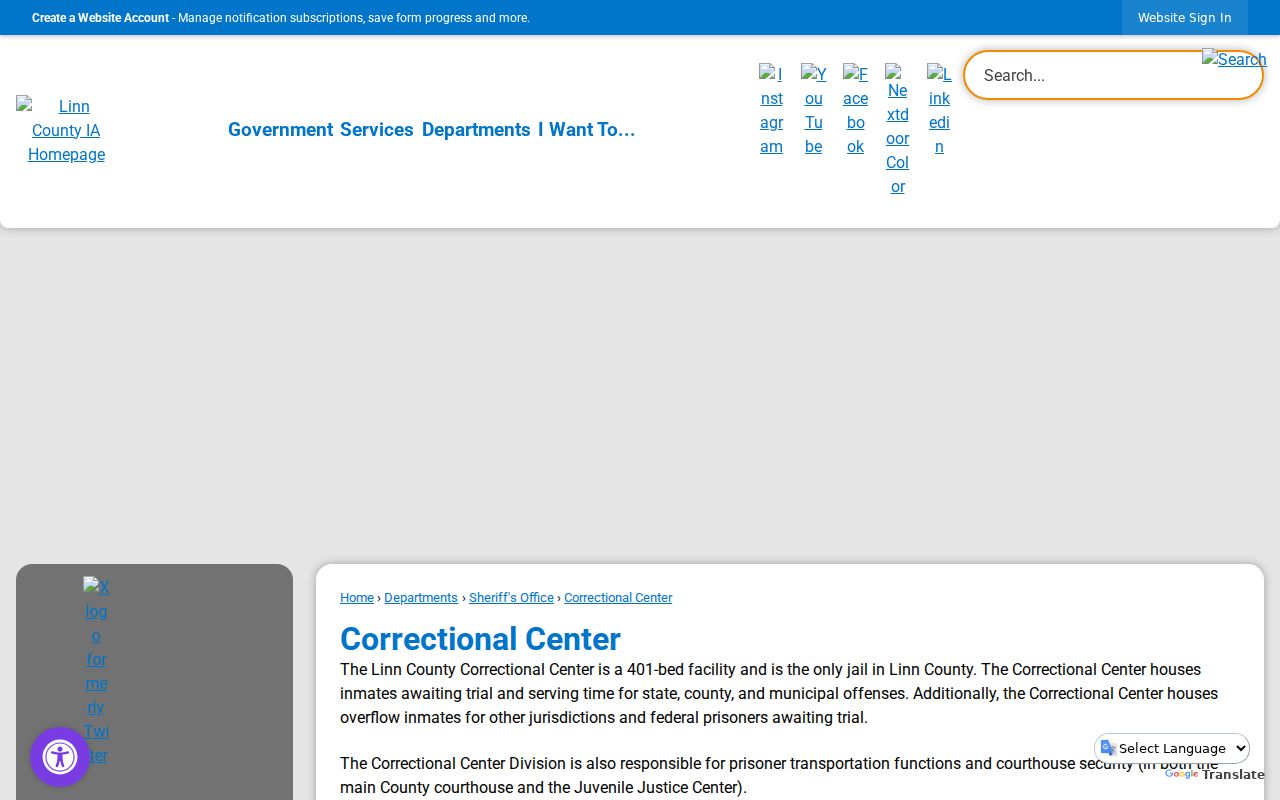
The facility is Linn County's only jail and holds pretrial and sentenced people from state, county, municipal, federal, and outside-jurisdiction matters. State imprisonment, probation, or parole belongs in Iowa Offender Search after transfer or sentence, not in the current county roster.
Inside a Linn County Arrest Record
A Linn County booking profile supplies custody matching fields, while the arresting agency report supplies the event narrative. Read the booking number and agency first because they help route a follow-up request. Charge text reflects information at intake and may not match the charge later filed by the Linn County Attorney.
| Booking Number | A jail intake identifier used to distinguish one custody episode and help staff locate the booking material. |
|---|---|
| Booking Date & Time | The point of jail intake, which may differ from the arrest time or the later court filing date. |
| Arresting Agency | The office that should hold the officer narrative, such as Linn Sheriff, a city police department, State Patrol, or campus police. |
| Charges | Intake descriptions and any supplied statute, case, or warrant reference; they are allegations and can change before filing. |
| Bond | An amount or type entered for release conditions. The court, not the jail roster, controls the judicial decision. |
| Booking Photo Policy | The Sheriff request form accepts booking-photo requests, but release remains subject to chapter 22 review and exemptions. |
| Release Status | Current custody, release, or transfer information when entered; a roster snapshot can become stale quickly. |
Medical and mental-health screens, internal custody-unit assignments, victim information, full government identifiers, and juvenile details are not public profile fields merely because the jail uses them during intake. Requesters should not infer those private fields from a short public entry.
Route Linn County Arrest Reports by Agency
The arresting agency controls its own narrative. Linn Sheriff reports go to the Criminal Division at 310 Second Avenue SW, Cedar Rapids, 319-892-6250. Marion Police records go to its Records Clerk at 6315 Highway 151, 319-200-7714, or records@marionpolice.com. Hiawatha Police provides reports and general information from the lower level of City Hall at 101 Emmons Street on weekdays. Iowa State Patrol records use the Iowa DPS request channel, and campus reports stay with the named campus agency.
Linn County Sheriff Criminal Division
310 Second Avenue SW
Cedar Rapids, IA 52404
319-892-6250
Weekdays, 8 a.m. to 4 p.m.
Request Sheriff incident and arrest reports, local checks, and eligible jail booking materials by form, counter, phone, mail, or fax.
The official Hiawatha Police page illustrates why Linn County arrest research must follow the agency that created the report.
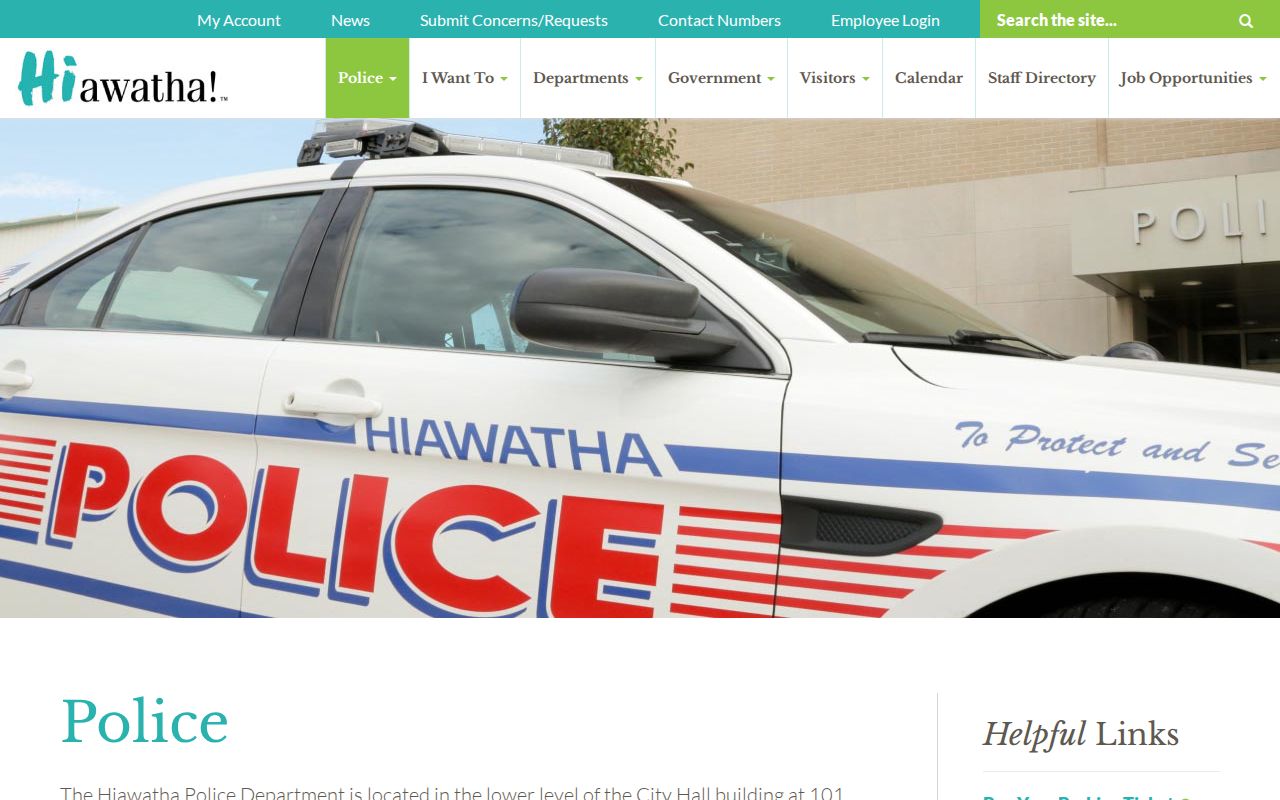
Hiawatha Police operates from City Hall's lower level, while any resulting jail intake still routes to the county facility. The city report and Linn County booking are two records from the same event.
Booking Logs and Recent Arrests
The county Who's in Jail link is the first check for current or very recent custody. Typical detail can include a name, booking identifier, booking time, limited descriptors, arresting agency, charge text, bond, and current status. Exact interface labels can change. Call 319-892-6300 when a release or transfer may have occurred, and use the agency report for historical detail.
Cedar Rapids Police Logs is another official starting point, but it is a calls-for-service search rather than a booking or conviction list. Its controls include Address, Call Types, “Show me all calls,” From, To, and Search. A matching event helps identify a date, address, and call type for a CRPD report request. It does not prove that police made an arrest.
The official Cedar Rapids Police page provides department context for city-created arrest reports.
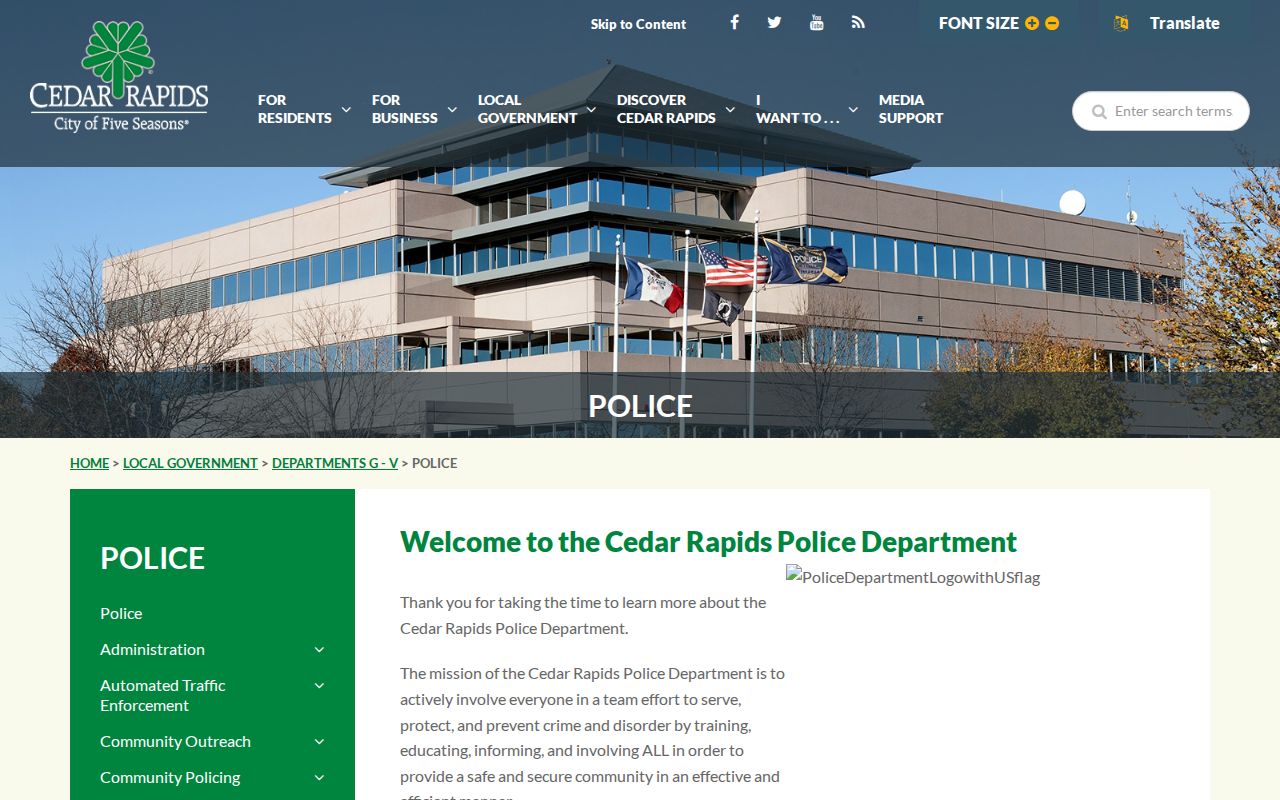
A CRPD narrative should be requested from Cedar Rapids Police, even when the same person was booked at the Linn County Correctional Center and later appeared in Iowa Courts Online.
Linn County Arrests and DCI's 18-Month Rule
The Iowa DCI product is broader than a Linn County local check, but public release rules shape what it returns. A request needs first name, last name, and exact date of birth. Each last-name variation needs a separate form and $15 fee. Without the subject's signed authorization, DCI withholds a completed deferred judgment and an arrest more than 18 months old that has no final disposition. Juvenile information is generally excluded.
A “no Iowa criminal history found” result is therefore not always a statement that no justice-system contact ever occurred. It may reflect no matched record, confidential juvenile information, or data that cannot be released through that request. A person reviewing their own history can use the DCI access and challenge process under Iowa Code §692.5. DCI may examine supporting fingerprint material and may ask for comparison fingerprints when identity is disputed.
The Linn Booking Record Is Not the Narrative
A common Linn County arrest lookup error is asking the jail or Clerk for an officer's full account. The booking record answers who entered custody, when intake occurred, which agency delivered the person, what charge information arrived, and what bond or status was entered. The police or Sheriff report can add probable-cause facts, officer identity, the event location, witnesses, and evidence. The court file adds the prosecutor's filed charge, motions, orders, disposition, and sentence.
For a focused police request, distinguish the incident or offense narrative from a CAD log, 911 audio, body-worn video, crash report, or property and evidence record. Give the event date and approximate time, location, agency, report number if known, and preferred format. If review or redaction raises a cost, narrowing the event, camera, date range, or file type can reduce unnecessary searching.
Arrests Are Not Convictions
An arrest is a lawful custody event based on a warrant or probable cause, not a judgment of guilt. A Linn County conviction exists only after the Iowa District Court enters a guilty judgment following a plea or verdict. No filing, dismissal, acquittal, or a later expungement route can make the ultimate record look very different from the first booking entry.
| Arrest Record | Conviction Record |
|---|---|
| Created by the arresting agency and the jail during the event and intake. | Created by the Iowa District Court after a guilty plea or verdict and judgment. |
| Shows that an arrest or booking occurred, not that the allegation was proved. | Shows a court finding of guilt and the charge on which judgment was entered. |
| Lives with the agency, Linn County jail, and potentially a DCI arrest cycle. | Lives in the Linn Clerk's case file and reported statewide disposition data. |
| May lead to release, no filing, dismissal, acquittal, deferred judgment, or conviction. | May lead to sentence, appeal, discharge, or a statute-specific expungement process. |
Note: A Linn County arrest is not proof of guilt, and the filed charge or final outcome may differ from the booking entry.